Showing posts with label Teaching Children. Show all posts

Friday, July 9, 2010

Bank on Learning

I remember when my oldest son was just approaching his teenage years. He came into the house one evening, excited and loud, declaring his love for the perfect food. He made a declaration of truth, “they fill you up, they are cheap and they taste good!” I’m glad he grew out of that because, although he made valid points in his argument, donuts aren’t exactly nutritious.

The growing stash of Pringles Cans in various sizes under my sink provides constant pangs of guilt. I already filled the mostly empty cupboard once. I gathered them up and took them to the after-school program. I was confident they would find a myriad of uses for the wonderful cast-away and ever-growing collection of cylindrical containers.

But alas, my collection grows. The only other thing occupying space within this cupboard is an extension cord which I must use when I need electricity to my washing machine. It’s annoying when I open the door to remove the cord. The containers spill over onto the floor and throughout the shelf. I must bend down and neatly arrange them, pushing them backward and hoping that when I return the cord to its rightful shelf space, the cans will not behave in the same manner and cause me more grief. What’s a Pringle Loving Girl to do? Surely, I shouldn’t give up my love of these crunchy salty delights! The Pringles cans are just one part of the story so let us move forward.


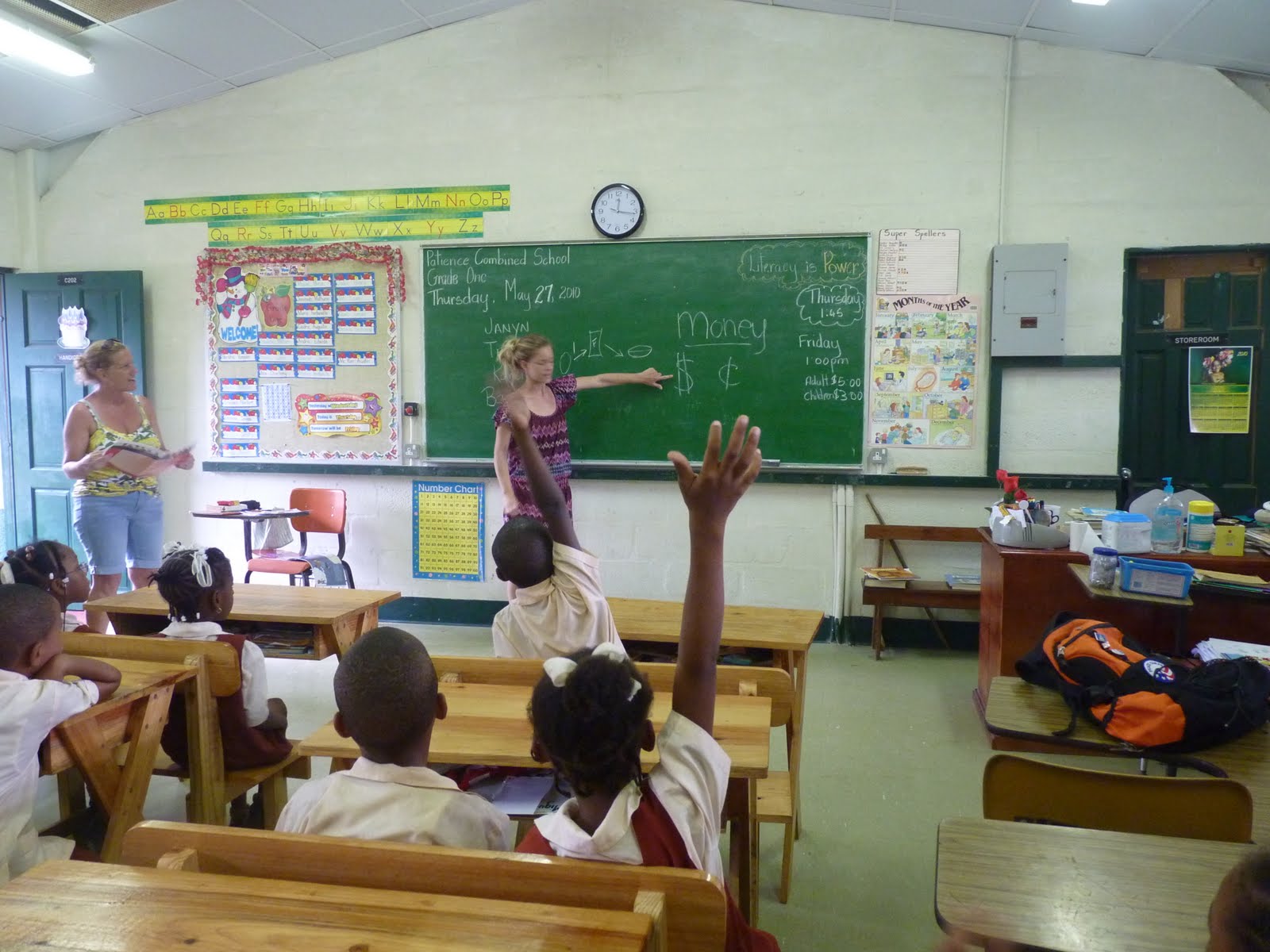
I’m teaching a Grade One Junior Achievement class. This is my first effort teaching this grade. I was excited when the teacher asked me if I would do it…that is until I looked through the kit. I previously taught Grade Three and found it a challenge because this American company made no cultural considerations in the curriculum. They used donuts for an exercise when many of my children had never eaten a donut. They gave me a cassette to play music when I had nothing to play it with. It became quickly apparent that Grade One is no different.

But first, let me be fair. These problems have been brought to the attention of Junior Achievement Worldwide and they have pledged to improve the worldwide portion of the program. It is a great program. I was in Junior Achievement in high school so many years ago and learned a great deal from it. But, like the Pringles Cans, this is just one point in the story and so again, let us move forward.

The focus of this course is to learn about acquisition. In other words, how to trade, barter and buy the things we need and want and how to save money to obtain things beyond our immediate reach. The kit contains stickers of coins and posters with blown up pictures of money. So, what’s the problem? Saint Lucia doesn’t use American Dollars; they use Eastern Caribbean Dollars. So once again, I must get creative.

When my niece taught the class she pasted American change side by side with Eastern Caribbean change so that the children could see the comparison. This was a good exercise because tourism is a growing industry in Saint Lucia. It is likely that they may see American dollars at some point in their life.

The instructions for this class were to read a story about a little girl who earns and saves money to buy a present for her friend. Then the children are given a sheet with four choices of presents they would like to buy. They are to choose one and put American coin stickers beside the item to pay for it. I quickly see this will make absolutely no sense to these little six year old children.

So, you may be asking at this point: What do Pringles and Junior Achievement have in common? Is she totally isolated in her village on a remote island and she just babbles on about nothing?

I looked at the material and made an executive decision to chuck it. After all, I’m the executive in this Junior Achievement class. And then it came to me . . . the vision. Suddenly 23 Pringles Cans would have a new home and my power cord could once again claim the space in my cupboard that it had enjoyed for so long before I discovered this new tasty food.

Yup, time to make 23 banks…and better yet, I’d just found a use for all those coins that I don’t use (reference my post, “Money”, March 2009). I knew I was in for the fight of my life and had to prepare like a prize fighter. I was determined to win the battle to deliver an effective class. Alright, I admit there may be a possibility that I'm being a little dramatic here.

I measured and cut paper. I glued smaller pieces of colored paper onto the white paper. The children will decorate the paper before taping their artwork to the Pringles Cans. I separated all the coins I’ve collected in the last year and divided them into the cans. I even went to the local credit union to get some quarters, adding two to each can. I made my own can. Look at this talent! Am I amazing or what?

The next day, I was armed with the Junior Achievement storybook and twenty three cans, each filled with coins. I walked down my stairs and through my village streets, the cans loudly clinking, the loud sounds ringing in my ears and drawing the attention of each passerby. I boarded the bus and finally made my way to the MoPo.

I showed the children my bank and asked, “would you like to make one of these today?” Of course they all declared with excitement, “Yes, Miss”. I pulled out several coins and put them on a nearby desk next to my can.

The story for this week is about a little girl who works for money which she saves to buy a birthday present for her friend. I read the story to the children. Each time the little girl in the story earned money, I would take coins from the pile and toss them into the can. They made a loud noise, capturing the children’s attention.

After reading them the story I gave each child a Pringles Can complete with about a dollar in change. I asked them to take the money and find all the one cent coins, two cent coins, five cent coins and so on. I asked them to identify each coin.

I told them because they had worked so hard in the Junior Achievement class, they would be able to keep the coins. One little boy whispered in my ear, “I have money!” I responded, “yes, you do”.

The teacher looked my way while the children were coloring and decorating the paper that would cover each can. She said, “where did you get all these cans”. I responded, “easy, I eat a lot of Pringles”. Although I’m sure there was some dietary judgment on her part, she did flash a friendly smile.

I passed by the desk of a little girl, Jilli, who slipped me a homemade card. After the class, I looked at what she had given me. Two princesses with crowns, the printed words “Junior Achievement” and inside the card read, “I love you Miss”.

The teacher kept all the things they had made during Junior Achievement. They would bring them home during the last week of school. On the final day I was there, the teacher pointed to their banks and told me the children were bringing in change they collect and are rapidly filling up their banks.

Sunday, July 4, 2010

Brenda


Flexibility and leaving expectations behind are two things that Peace Corps stresses. Previously, I worked for years for a globalized company and then taught college courses in a minority community college where students came from far corners of the world. I have traveled, read and studied other cultures. Still, I was surprised at the cultural norms that dictated how people viewed me as a volunteer and Peace Corps as an organization. Hence, the words 'flexibility and expectations' continue to add meaning.


Looking back on the last twenty-three months, time was swift. I can recall the musty smell of the hotel conference room we left in Miami after our two-day staging. Small, but memorable, complimentary comments made by hotel staff about Peace Corps Volunteers were gratefully accepted.


It doesn’t seem long ago that I was standing in Miami International Airport with my allotted eighty pounds of luggage, looking around at the other thirty-nine people that would land with me in the Eastern Caribbean island of Saint Lucia.


I remember almost each step I took off the airplane and onto Saint Lucia’s soil in the heat of the day and asking myself “what have I done?” Within a few minutes we were in the parking lot talking with the volunteers who were excited to meet us. Finally, we slowly took cover from the rain inside the bus that would take us to the Pastoral Center for our orientation. I remember thinking “this is so right for me”. After a few days we were sent 'home' with our host families, training began and seven weeks later we were sworn in as Peace Corps Volunteers.


I have worked with two IPPs (Institutional Point Person which means the person with which a volunteer is assigned) and most clearly remember my first meeting with Brenda. During my time on the island, I have discovered three characteristics that both the IPP and volunteer must have to achieve success.

    1. The IPP and PCV are in it for the right reasons. Both are respected leaders in the community and there is a willing following. The people working along side the IPP and Peace Corps Volunteer are motivated and committed - or at least have the potential to be motivated and committed.
    2. Leave expectations behind and practice flexibility. The PCV and IPP want to collaborate. Together the volunteer and IPP discover diverse ways to do new things, to motivate the people around them and to achieve success in their projects.
    3. Relationships are important and built. Good listening skills, shared leadership, building off each others ideas and giving credit where it is due are just a few things that spawn great relationships.

    Intellectually, this is easily understood but in practice when two people from two cultures come together it can be a challenge.
    If these characteristics are not present it's a waste of time.

    For the most part, Peace Corps Volunteers don't have the answers, but we offer fresh perspective and add a new dimension of thinking diversity. Maximizing collaboration, sharing openly to discover new paths to success, and practicing good communication skills to create understanding, and yes, sometimes tolerance, can be found when an IPP and the Volunteer are chasing the same result: success.

    I have had both successful and unsuccessful experience with IPPs. The most difficult thing for most people to accept is change, and change is not only important for the IPP, but also for the volunteer. The ability of the IPP and volunteer to work together to create meaningful work is dependent on these characteristics. Volunteers are here not just here to teach, but to learn.


    The moment I met Brenda, we clicked. She is a collaborator. We are working on an after-school program together. This is a picture of Brenda and her son Lyle. I've been following her around for a couple of weeks to get a good picture of her. I was never successful so I went to her Facebook page and stole this photo.

    I created a workshop a few months ago for the facilitators. During the workshop we talked about how our perceptions become reality. We discussed a child who was labeled as a “trouble-maker” and they were ready to dismiss him from the program. Although he is only ten, he has the label firmly fastened to his chest. He brought it with him to the program, he brings it with him to school and in the community.

    Together we urged the facilitators of the program to give the boy another chance by changing their expectations of him, thereby allowing him to react in a positive manner. The boy has improved dramatically. After a vacation off-island, I returned to find a message waiting for me from Brenda. It appears his teachers are also marveling at the behavior progress he has shown. She said, “We are making a difference!”

    Success is measured in small and sustainable change. Small change will eventually add up to big change, but not likely pointed at one person. I've concluded it is the team of volunteers, IPPs and the people living in the villages that, over time, achieve real lasting success. It starts with two people from two different cultures working together, being flexible, leaving expectations behind and moving together toward common goals and vision.

    Wednesday, June 30, 2010

    Mexican Independence 200 Years


    Tracy left the island and it was time to slow down a bit. Janyn and I spent slower days; we had a Banana Daquirie at Sandy Beach and went to the after school program. The last Thursday she was here was Corpus Christi day, a religious holiday.

    Elvinette arranged for a large bus to take children to the Mexican Embassy. When she asked if we wanted to attend, we jumped at the idea. The Embassy had an exhibit celebrating it’s 200th anniversary of Independence from Spain.

    I’ve become a night person since I retired from the corporate world in 2005. Before coming to Saint Lucia, I taught night classes. Since being here, I start my days after noon. So when Elvinette said we had to be in MoPo to meet the bus at 9:00 in the morning I knew it would be a small challenge.

    The next morning Janyn and I arrived in MoPo just in time for a huge downpour. We took shelter and waited for the bus. As expected, the rain stopped as quickly as it started.

    It was a happy bus ride. The children were singing songs and there was excitement in the air. For many children, opportunities to go outside the village are few and so the bus ride was high energy and just plain fun.

    In less than an hour we drove past the sparkling Vigi Beach, past the airport and up a steep hill where the embassy overlooks the Castries Harbor. The Children got out of the bus and waited until everyone was ready to enter.

    The Mexican Embassy is a tiny room and I wondered how long the exhibit would hold their attention.

    We were in this room for a very long time. To my surprise the children enjoyed every moment.

    The Mexican Ambassador was thrilled that we were there. He played with the children. They set up tables and played a game of Mexican Bingo and prizes were distributed. He showed them how to play with a top and the interaction was delightful.

    The children took our camera and captured their moments.


    Janyn and I were amazed at how captivated the children were at the Embassy. Confined to a small space for over two hours, they were well behaved and interested.

    I thought of my own children and what it might have been like if I had taken them to this exhibit when they were young. Actually, just thinking about it gives me a headache. So lets move on.

    We piled back into the bus and moved down the hill until we found a nice shady tree at the beach. We enjoyed a great picnic lunch. Of course, neither Janyn nor I thought far enough ahead to bring food, but we spotted a couple of food stands where we could buy something. Brenda would have none of that. There was plenty of food for us too. The children played American Football on the beach, collected shells and made sandcastles. The ice cream man stopped and scooped cups of cold dessert for us.


    And so the day was over and it was time to pile back into the bus for the long ride home.

    Janyn and I looked at each other and no words needed to be exchanged. We bid our friends a fond farewell and walked down a two mile stretch on the beach to do - well, what we do best.


    Saturday, June 26, 2010

    Resources

    How was I going to get everything done? When I read the email I knew that the request was a desperate attempt to find someone willing to help analyze the stack of surveys that had been left unattended far too long. The deadline could no longer be moved forward.

    The problem was that I had to teach the little first grader’s the concept of money being exchanged for goods. I hadn’t read the lesson plan and prepared. I can’t ‘wing it’ when it comes to teaching. I emerged from my computer and looked at the two innocent people in my living room. My sister Janyn and niece Tracy were visiting. Ah ha, resources!

    I handed them the package of Junior Achievement materials and said, “How would you like to teach a class tomorrow?” While I worked in my bedroom, coding and inputting numbers and creating charts and graphs, they busily taped coins to paper to show the children the difference between E.C. and U.S. coins. They clearly received the fun assignment.

    The next day we walked down the road to catch a bus to MoPo. Tracy was armed with knowledge and a plan to teach the class. She led the students through the lesson. Janyn assisted when needed while I played photographer. It was Tracy’s day with the children.


    Students are always curious about people with light skin and blond hair. Tracy not only has light skin and blond hair, but is young and pretty as well. A little boy in the corner professed his love for her; he was smitten.

    Just as Tracy began to read a story to the class, there was a thunderous rain coming down onto the aluminum roof. There is no glass in the windows because it is far too hot here. Doors aren't closed because ventilation is needed. So when it rains it becomes deafeningly loud. Unfazed she raised her voice and continued while the students listened intently. This happens so frequently the children have learned to adapt.

    The emergency assignment was perfectly timed. I completed the analysis and the Junior Achievement Lesson was a big success.

    So, here’s the message: if you come to see me you aren’t just a visitor – you are also a resource! Oh, and when I went to teach the class the next Thursday, the little boy who “loves Tracy” asked where she was. Apparently he was hoping to see her again and disappointed that his true love had left the island.

    Wednesday, May 19, 2010

    Observations

    The educational system in this country has adopted the English style of learning. They do a lot of reciting. They are told and then they repeat what they are told in unison.


    When I taught at Monroe College, the students were terrified because my tests were essay questions rather than a sheet of paper with boxes to be marked true/false and multiple choice questions.

    My guess is that the students did well in primary and secondary education which allowed them to advance. Although it's not scientific research, I bet these students are ones that learn best by memorizing and reciting. They likely did not learn by respectfully challenging the instructor.

    Students tell me that Saint Lucia professors make tests as difficult as they can and expect many to do poorly. The American system seems less punishing and more nurturing. As a teacher, I want students to do well and when they don’t I share in their failure. Students are told that if they attend an American university they will find it very easy. Really?

    Working in the after-school program with 8-10 year olds has been enlightening. I am amazed at the amount of illiterate children here. It is simply frightening to think of so many children who, without intervention, will not be able to read the sign on the road or the menu handed to him. Imagine yourself going through just one hour unable to read. It’s an enormous handicap. I wish I could do more about this problem.

    There are factors that come to play: a high illiteracy rate among parents, children having children, poor diet, and untreated learning disabilities, poor teaching facilities that lack resources as well as descent acoustics. There are deeper problems, such as the lack of parental resources to buy uniforms and books for their children and parents who place little value on formal education. I’m not sure it’s much different in the United States.

    (I have no idea if the children in these pictures read or not. They are just adorable children and representative of those on the island.)

    Wednesday, April 14, 2010

    Thanksgiving, Part II

    Three days a week I go over to the school to visit the after-school program. I help out where needed, but mainly I’m there to see if there are problems, if things are running smoothly and monitor the progress of the team. And, I like to see the children.


    The program has a focused subject each month and they are currently studying nutrition. I have no idea where the poster that is hanging on the wall came from. It is a curious picture to find on this island. It doesn’t really matter; the assignment the facilitator came up with is a good one. She asked the children to study the poster and write a story about what they think might be happening.


    When I walked into the room, I heard a flood of children trying to get my attention, “Miss Karen, read my story!” Suddenly I was surrounded by little people shoving paper into my hands. I read each story and with enthusiasm I tell each of them how wonderful their stories are.


    One little boy saw the poster with Mary and baby Jesus in Bethlehem. They were having a picnic. Other children saw the characters as their own families and carved stories around the characters in the poster. With each story I read, I became increasingly amused.


    Then I read a story that says, “the meat has socks”. . . What? I look for the child assuming there is an error on the paper. Then the facilitator points out what she learned after questioning the little girl.


    I study the picture which is a representation of the first Thanksgiving Dinner. There are Native Americans, Pumpkin Pie, Pilgrims and a turkey. And the turkey legs are decorated with frills. Of course! It makes perfect sense. The meat has socks!

    Saturday, April 10, 2010

    Thanksgiving, Part I

    I never gave it much thought until yesterday. As adults we take things for granted. It takes a child to point out the ridiculous that is right before us.

    Do you know what a frill is? Alright, here is a hint: it’s a noun. Need another hint? OK, you are likely to see a frill in a fancy restaurant or on Thanksgiving. Perplexed? Are you reaching for your dictionary? I will save you the trouble.


    According to Webster, frill is defined as, “a strip of paper curled at one end and rolled to be slipped over the bone end (as of a chop) in serving.” You know, it’s those silly looking paper things they put on the legs of those poor turkeys that end up on our dinner table.


    Only one turkey gets
    pardoned. I wonder if the pardoned turkey, assuming he knows about frills, feels that it is disrespectful to put silly paper decorations on the legs of his deceased comrades.


    Yes, I eat turkey, but the more I research information for this little blog post, the more distasteful it becomes. I may be off on a tangent, but I am going somewhere with this and I promise you it will have an element of Saint Lucia in this story.

    Why do frills exist anyway? Do you know that you can find directions on the internet to make your own frills! Who has the time for this? Even if I did cook, it would not occur to me that I should buy ready-made frills to decorate the poor bird. It’s hard to believe a company could make a profit on these things.

    The more I looked into this subject, the more absurd it became. Do you know that there is a company who not only makes frills, but they also make soup socks, lobster bibs and evendough bands; don’t ask. Now this is an entrepreneur! This takes some out of the box thinking. But now I’m way off the subject.

    Actually, you are lucky. A quick search of the internet did not reveal the history of frills. Although I am still curious, I will let this one go. I conclude: they just are. OHMMMMMMMMM.

    There is a story behind this story. You are likely wondering, assuming you are still reading, why I would be writing about frills in April and will I ever get to the point of this story. Stay tuned for the conclusion to this story: Thanksgiving Part II.

    Thursday, March 25, 2010

    Teaching

    The Peace Corps has three goals. The first is to help people in another country, the second is to promote a better understanding of Americans and the third goal is to promote a better understanding of other peoples on the part of Americans.

    Teaching is a way to check off each goal in a clean sweep. I gained something valuable from the Peace Corps experience: I have become more aware of the United States focus on business education. My experience is that more often than not, courses are taught in narrowly focused specific subjects rather than focusing the subject matter in a global perspective with a systems view.

    Although there is usually a chapter in a text about the global environment, international courses are more often separate subjects when they should be integrated. There may be an inference to globalization, but no real information or exercises to help students learn what that really means. There are specific internationally focused degrees, but why? If we are to compete in a global environment, we can't think in global silos, but many times we teach students to think in silos. It's arrogant.

    When I was teaching a course in Management Strategy, the text had a section on generational values. When we talked about this subject in class, the students were trying to bucket themselves in the American generational values. There was no qualification that the material is only relevant to one area of the world. I was stymied.

    Although Saint Lucia is a westernized nation and some of the values fit, they have their own history which created their unique culture and generational values. The next few weeks I had them research and put their own generations into buckets.


    For the first time, they began to think about the diversity they would face if they were to work in an American company. And, they began to recognize how their own value system can collide in the workplace here on this island. That exercise taught me as much about Saint Lucia as it taught them about American values. It was rewarding.

    I teach Junior Achievement in the primary schools and none of the material is geared towards a global environment, although they have many customers in many countries. They have an exercise in making paper donuts when many children don't know what a donut is. They have stickers with American currency when children here only know the Eastern Caribbean Dollar. There is an exercise to elect a mayor, one of which supports a facility to take care of stray pets; neither of these things makes sense to the children in my village. It’s baffling.

    The opportunities I have had to teach in a foreign country have helped me grow. I hope the tools I have passed on to them will help them in the years to come. I know the knowledge, culture, information and rich interaction they have shared with me will impact me for years to come.

    When I think of teaching and how it connects with the goals of Peace Corps, I think I can easily check all three boxes.

    Wednesday, February 24, 2010

    I Found my Groove

    Did I ever say that I love this experience? Did I ever say that this was the perfect thing to do at this time of my life? Did I ever say that, for me, missing this would have been missing life? Well, I should have. This is a long post, but I don’t know how to shorten it…so I put a lot of pictures in it to make it more interesting.


    Monday was the 31st anniversary of Saint Lucia’s Independence. The families and children of the After-School Program went to Latille Falls for a picnic. It’s a few miles from my house and I decided to walk there. I packed up my backpack filled with requested chocolate chip cookies and headed down the road.


    The road is beautiful and I pass by one of my favorite trees, banana farms and greet farmers as I pass. A few farmers pass in their trucks and ask if I want a ride. I thank them and decline, not because it’s dangerous, but because it’s a beautiful day.


    Sly, or “Rasta Man”, the owner of Latille Falls, gathered the families together to talk about history and wish everyone a good time. The picnic was nice and gave me time to spend with the parents of the children I am with four days a week. After a few hours, I walked home. Cardio exercise is never an issue here.


    Early the next morning, I finished making yet another batch of chocolate chip cookies I mixed last night when I got home. I had to get up early to do this because they need to be frozen before I pack them up and take them to the school. If they aren’t frozen, they will end up a melted mess. Oh, the things I’ve learned during my time in a tropical climate.

    I made a cup of the new Instant Starbucks Coffee; it’s better than any fresh brewed I can make here. It’s mango season and my breakfast of choice.

    One of the facilitators arrived for private computer class. I’m teaching her Microsoft Office and also the art of blogging. I am hopeful that she will take over the blogsite I have just set up for the After School Program.

    I straightened the house, made the bed, did a few dishes, got dressed and packed up the cookies. I picked up the materials for the Junior Achievement last lesson and headed for the primary school in my village. Since this is my last class, I will hand them certificates and a small bag of cookies.


    I arrived after a ten minute walk feeling like I needed another shower. We are in a drought and it’s hot. I greet the children and walk down the isles and they all touch my arm or my hair and some give me hugs. Some squeeze so tight I wonder if I will survive it. They are all screaming “Miss Karen”.


    I went over the last few weeks and what we learned. Then we went through the lesson. When I was done and the certificates were handed out, they surprised me with a party. One little girl read a poem written by the children. Another sang a song for me. She wrote it: “Thank you for being our teacher. We love you and don’t want you to leave. Thank you for being our teacher.” It was a child-like song with little melody and lots of love. It was touching. They gave me a gift bag, with a t-shirt and a card.


    Then the teacher brought out a large platter of cheese sandwiches. She proclaimed, “we used the mass production method you taught them to make the sandwiches”. We took lots of pictures together. They love pictures. Before I left everyone wanted a hug. There was a line for hugs. One child nearly knocked the wind out of me with his bear hug. The party they planned for me was amazing and something I will always remember. I assure them I will be in the village for the next few months and this goodbye is only a Junior Achievement goodbye.


    My next stop is a bus ride away to the after-school program. At the picnic, I promised a child’s father that I would work with his child. He explained to me that everyone on both sides of the family, with the exception of one daughter, is illiterate.

    His son is ten years old and can’t read. I will assess his skill level and then put some materials together for the boy’s sister to help him. I will work with him as much as I can, but he needs help at home too. So many people here are illiterate.

    I arrived at the village and walked down the road to the school. I found the Kindergarten teacher, a friend, and she helped me make some flash cards and other things to help him.

    Then I learned the IT Facilitator is ill and I needed to teach IT. So much for assessing the boy today. This will have to wait. Now I have to figure out what I will do with this class. Fortunately, the facilitators are submitting Lesson Plans. I ask for the plan, read it and remember the Jelly Belly’s and flavor guides that are in my backpack. A perfect day for a behavior tool!


    I began the session with a discussion on how they were feeling. I have found many children cannot identify feelings beyond anger. I talked to the children about what we had learned about Saint Lucia Independence.


    During the break, Brenda and I talked. She asked if I would put a PowerPoint presentation together to showcase the After-School Program successes. Of course I agreed, although I was thinking of the four full-day workshops I am currently designing late each evening.


    When the children returned from break, I asked them to write five questions down. What is the capitol of Saint Lucia? What is the national bird? What is Saint Lucia’s Motto? Who is the Prime Minister? What is the tallest peak on the island? They were required to go to the computer and find the answers. They had fun with the exercise and wanted more.


    As a reward for a job well done, the children and I sat down, flavor guides in hand and commenced to tasting the bursting flavors of Jelly Beans.

    When they became hyper, bouncing off the ceiling and so active that they were becoming obnoxious, I declared the day had ended and sent them home to their poor unsuspecting parents.

    I'm exhausted by now...does it show?

    I jumped on a bus back to my village. I called “stopping” early, getting off at the far end of my village to walk the long way home. Once home I ate another mango, turned on the computer and finished Brenda’s PowerPoint slides shortly before midnight while watching the Winter Olympics.

    This morning I’m finishing up a load of laundry, writing this journal piece before I flag down a bus to the next village to meet with teachers to continue creating individual assessments for the forty after-school children.


    Hopefully, I will find the time to assess the little boy’s reading ability today and then get back in time to work on some of those workshops. As I speed down the road to the end of my service, my plate is full. This is the way I like it. I’ve got my groove on.

    Tuesday, February 2, 2010

    It's all about Donuts!

    The last time I went into a third grade class to teach I was speechless….children put cardboard in their ears and noses. They were using chairs similar to the way bullfighters use their capes. I was there to teach the difference between unit and mass production and they would have none of it.


    The Junior Achievement Kit provided paper donuts and stickers so the children could make paper donuts using both mass and unit production methods. But, the children couldn’t move past the fact that they had never tasted a donut. To make matters worse the teacher was absent and I was left alone with the class. After a half hour, I gave up; called it a day and left defeated. The children were left unsupervised.


    This time was different. I've been planning this lesson since I visited home in December. I was prepared and armed…armed with little packages of donuts that I carefully wrapped and brought back from California. These tasty treats would be distributed if and when the lesson was finished and they behaved accordingly. And, the teacher was there to ensure that they wouldn’t treat their chairs like bullfighting capes. That always helps.


    The lesson lasted one hour. Each time a child finished a donut, it was held up for my inspection. Each time, I expressed excitement, “Oh, look class; the perfect donut.” Or, “Look this one is colored purple! It must taste like Goofy Grape!” It was fun. It was a success! I’ve redeemed myself as an educator and I can once again hold my head high.